- Instant email delivery
- Global licenses
- Secure checkout
- 24/7 customer support
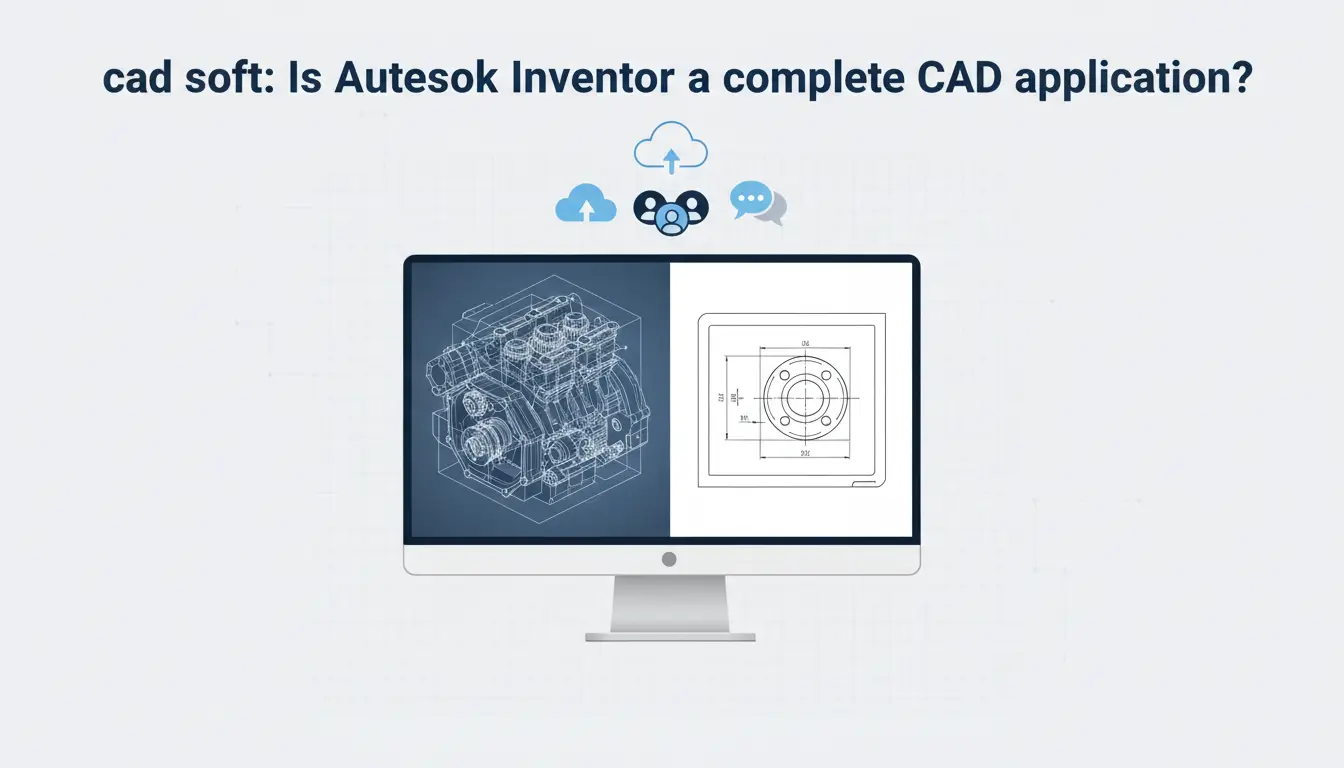
cad soft is the informal term for software used to create, edit, and communicate design intent in digital form. It encompasses a spectrum of tools—from lightweight 2D drafting apps to sophisticated 3D parametric modelers and BIM platforms—each designed to help professionals produce accurate geometry, annotated drawings, and exportable data for fabrication or analysis. Key expectations include precise modeling, reliable drafting and documentation, support for common file formats, and basic automation or customization via scripts or plugins. For a representative desktop application, see Autodesk AutoCAD.
At its core, cad soft should provide robust modeling (wireframe, solid, surface, or parametric), intuitive drafting tools (layers, dimensions, and blocks), and clear documentation workflows to produce construction-ready deliverables. Visualization and rendering capabilities help communicate intent, while simulation and interference checking assist validation before production. Modern cad soft emphasizes collaboration: shared models, version control, markups, and cloud-based review cycles reduce coordination friction. Interoperability—import/export of common formats (DWG, IFC, STEP, etc.)—is essential for multidisciplinary projects, and APIs or plugin frameworks let teams tailor tools to specific workflows. For an overview of widely used CAD product families and their roles in architecture, engineering, and manufacturing, see the official AutoCAD product information.
Autodesk Inventor is Autodesk’s 3D mechanical design and CAD application, tailored for professionals who need precision parametric modeling, assembly management, and production-ready documentation. It serves mechanical engineers, product designers, and manufacturing specialists working on everything from individual components to complex, multi-part assemblies. Inventor combines solid modeling, simulation, and drawing automation to shorten iteration cycles and reduce errors between design and fabrication. It integrates with CAM, PDM, and PLM workflows to keep data associative and up to date — ideal for teams focused on quality, repeatability, and efficient handoff to manufacturing. For package details, see the Autodesk Inventor full package, and for broader platform context explore Autodesk product design & manufacturing.
As a cad soft choice for mechanical design, Inventor is popular with engineers and shops that demand accurate, constraint-driven models and reliable 2D documentation derived from 3D geometry. Typical users include mechanical design engineers, tooling and fixture designers, sheet-metal fabricators, and small-to-mid-size manufacturers who need detailed BOMs, inter-part relationships, and validation through simulation or motion studies. Inventor’s tools for sheet metal, weldments, and frame generation speed production workflows, while its drawing and annotation capabilities ensure clear manufacturing instructions. The software also supports interoperability with other Autodesk solutions and common industry formats, making it a practical option for teams that must collaborate across design, analysis, and production disciplines.
At the heart of modern CAD workflows are a few core capabilities every practitioner expects. Parametric modeling with feature-based histories and constraint-driven sketches lets you iterate designs quickly and maintain intent across revisions. Robust assembly design supports large assemblies, interference checking, lightweight representations and flexible mate systems for realistic motion studies. Sheet metal tools create accurate flattening, bend tables and NC-ready output to bridge design and fabrication. Integrated simulation — from linear static FEA to basic motion and tolerance studies — lets you validate form and function early, reducing costly rework. Finally, automated 2D drawing generation produces standard-compliant views, annotations and BOMs for manufacturing and approvals.
These functions are tightly coupled with file exchange and CAM workflows so models move smoothly from design to production. See a comprehensive professional toolset in the Inventor full package, or learn more about product design solutions on the Autodesk Product Design & Manufacturing overview.
Yes — Inventor is a full cad soft designed to meet the expectations of mechanical and product design professionals. It delivers parametric 3D modeling, assembly management, 2D drawing production, sheet‑metal and frame generators, and integrated simulation tools for stress and motion analysis. Inventor supports detailed manufacturing workflows (BOM creation, data exchange, and CAM preparation) and automation through tools like iLogic, making it suitable for both concept and production stages. Its native formats and robust import/export options ease collaboration with CAD systems and downstream tools.
The software sits squarely in Autodesk’s product design ecosystem, so if you need installation files, licensing details, or the full feature list, see the Inventor full package. For vendor-level context about Autodesk’s offerings for product design and manufacturing, the Autodesk Product Design & Manufacturing overview explains how Inventor fits alongside other professional tools.
As a cad soft, Inventor excels at constrained, parametric design and complex assemblies, with strong drawing control and data management for production. Its simulation and tooling features reduce iteration time, and its automation capabilities accelerate repetitive tasks. However, it demands capable hardware and a learning curve typical of professional-grade systems. For multidisciplinary teams, Inventor’s compatibility with other Autodesk products and standard file formats helps integrate design and manufacturing workflows with minimal friction.
As a cad soft, Autodesk Inventor brings together robust modeling, validation, and manufacturing tools that accelerate product development without sacrificing accuracy. Parametric, direct, and freeform modeling options let designers iterate quickly; assemblies manage complex structures with level-of-detail and lightweight representations to keep performance predictable. Integrated simulation (FEA, motion, and vibration) helps validate designs early, while tolerance analysis and interference checking reduce downstream rework.
Manufacturing-focused toolsets—sheet metal unfolding, frame generation, tube & pipe routing, and precise CAM export—translate models into production-ready geometry and NC data. Automation through iLogic and configurable templates enforces company standards and speeds repetitive tasks, and Content Center libraries supply standardized fasteners and components to shorten design cycles. Drawing automation produces associative, standards-compliant documentation and bill-of-materials information that stays linked to the model for traceability.
Collaboration is supported via model-based definition, shared views, and interoperability with common formats so multi-discipline teams remain aligned. Inventor also integrates with PLM/PDM systems to manage revisions and approvals. For organizations evaluating editions and deployment options, review the Inventor full package for Windows to find the configuration that best fits design-to-manufacture workflows.
Inventor’s combination of design, simulation, and manufacturability checks makes it a practical cad soft for end-to-end product development. Early-stage conceptual tools and rapid prototyping links feed into detailed parametric models, which are validated with built-in simulation and optimized before tooling. Interoperability with broader product-design ecosystems, including cloud-enabled workflows and CAM systems, ensures that validated designs transition smoothly into manufacturing. For an overview of the broader product design and manufacturing ecosystem from the vendor, see Autodesk product design & manufacturing.
cad soft workflows rely on a parametric history, constraints, and disciplined assembly management to keep design intent explicit and changes predictable. A feature tree with driven parameters lets you edit core dimensions and have downstream geometry update automatically, while geometric and dimensional constraints maintain relationships between parts.
In assemblies, mates, joints, and subassembly structure control degrees of freedom so motion, interference, and load paths behave as intended. Top‑down techniques (driving geometry from an assembly) and in‑context edits speed iterations; design tables, configurations, and patterns automate variant creation without breaking the master intent.
Good assembly management also reduces rebuild cost—lightweight representations, selective loading, and clear naming prevent accidental link breaks. For teams moving from sketch to production, tools like the Autodesk Inventor full package streamline parametric part and assembly workflows, and Autodesk’s product design & manufacturing resources explain platform choices and best practices.
Inventor sits squarely in Autodesk’s mechanical design family and is often the go-to choice when engineers need robust parametric 3D modeling, large-assembly management, and detailed manufacturing documentation. Compared with drafting-oriented tools like AutoCAD, Inventor emphasizes parts, assemblies, motion simulation, and automated bill-of-materials rather than 2D drawing productivity. Against Fusion 360, Inventor favors heavyweight, on‑premise engineering workflows and deeper assembly and drawing controls, while Fusion trades some depth for cloud collaboration, rapid concept modeling, and integrated CAM. For architects and construction professionals, Revit and the AEC Collection prioritize BIM, documentation, and coordination — areas outside Inventor’s core scope.
Typical Inventor users include mechanical designers, product engineers, and manufacturing teams who need controlled revisioning, standards-based drawings, and integration with CAM. Small design shops and hobbyists may prefer Fusion 360 for its ease of use and cloud tools, while drafters and multidisciplinary offices often retain AutoCAD or AutoCAD-based verticals. If you want a full-featured desktop mechanical suite, consider the dedicated Inventor offering; see the Inventor full package for feature specifics.
As a cad soft comparison, focus on the task: Inventor excels at detailed mechanical engineering and production-ready deliverables, Fusion 360 at iterative product development and integrated CAM, and AutoCAD at general drafting and plan generation. Revit serves architects and BIM workflows. Choose Inventor when you need controlled assemblies, advanced tolerancing, and drawing standards; choose alternatives when cloud collaboration, lightweight concept modeling, or building information modeling are primary. For a summary of Autodesk’s product families and where each tool fits, see the AutoCAD overview.
When your project and team center on detailed 3D mechanical design, heavy assemblies, and manufacturing-ready documentation, choose Inventor. It excels at complex part and assembly modeling, automated design rules (iLogic), robust BOM and drawing production, and integrations with ERP/PDM — all crucial for established engineering teams and industrial workflows. AutoCAD remains the right choice for DWG-centric 2D drafting, site plans, or multidisciplinary CAD where lightweight geometry and broad compatibility matter. Fusion 360 shines for iterative product development, cloud collaboration, integrated CAM and simulation, and smaller teams or startups that need quick iteration.
For collaboration, Inventor paired with Vault supports strict versioning and enterprise workflows, while Fusion 360’s cloud-native model streamlines remote co-design. If you need a proven desktop 3D mechanical solution, see the Autodesk Inventor full package; for broader platform context visit Autodesk’s product design & manufacturing overview.
As a versatile cad soft solution, Autodesk Inventor and similar platforms are central to mechanical design workflows across many industries. Engineers rely on parametric modeling for machinery design, precision tooling, and consumer product development, while fabrication shops use sheet‑metal and weldment tools to translate designs into manufacturable parts. Inventor’s assembly management, BOM generation, and simulation features reduce iteration time and improve downstream manufacturing handoffs — see the Autodesk Inventor product page for typical capabilities.
In machinery and tooling, cad soft enables accurate kinematic studies, interference checking, and lifecycle documentation that are essential for heavy equipment and jigs. For consumer products, designers use surface modeling, appearance studies, and rapid prototyping outputs to accelerate time‑to‑market. Fabrication workflows benefit from integrated sheet‑metal flattening, nesting and CAM handoffs that streamline production. When teams need a single point of truth for part revisions and manufacturing preparation, these tools provide controlled data exchange and interoperability — learn more about industry workflows on the Product Design & Manufacturing overview.
cad soft streamlines the full mechanical workflow with concrete outputs: assembly design with constraints and fasteners, automated BOM generation, simulation-driven validation, and CNC export for machining. Teams can extract hierarchical BOMs with part metadata to feed purchasing, run static and motion FEA to check clearances and durability, then export STEP/IGES or post-processed G-code for 3‑ to 5‑axis toolpaths. For rapid prototyping, generate STL for additive runs and NC programs for mill-turn prototypes. Typical deliverables include clean assembly drawings, revision-controlled BOMs, stress and modal reports, and machine-ready G-code.
Version control and linked drawings reduce assembly errors and shorten time-to-market; automating BOM exports to ERP eliminates manual entry and procurement delays. Explore a combined design-to-CAM option like Fusion 360 with FeatureCAM or see Autodesk’s product design collection details on the Autodesk product design collection.
cad soft buyers should understand that Autodesk has shifted almost entirely to named‑user subscription models and collections. Subscriptions are offered in term lengths and bundles (including industry collections) with cloud services layered on top — consider the licensing scope for local network use versus cloud collaboration and whether you need Vault or Autodesk Docs for data management. For product details and options, see the AutoCAD product page.
Integration is a major factor: Autodesk products are designed to interoperate (Revit, Inventor, Fusion 360, Navisworks, etc.), but each integration path has caveats. Vault provides robust version control for CAD and MCAD files; BIM workflows commonly use Autodesk Docs or BIM Collaborate for Revit-centric projects. File compatibility centers on DWG (native for AutoCAD), RVT (Revit), IPT/iam (Inventor), and neutral exchange formats (STEP/IGES/Parasolid) for cross‑platform handoffs. Expect occasional translation issues with complex assemblies, nested references, or custom objects.
Practical recommendations: lock product versions across a project, standardize on a neutral exchange format where possible, maintain a clear export/import checklist, and validate critical assemblies after conversion. If you need clarification about subscription tiers and cloud features, check Autodesk’s main site for current subscription and collection information.
Vault is the go‑to on‑premises data management tool for many cad soft workflows. It manages revisions, controls check‑in/check‑out, and integrates tightly with AutoCAD and Inventor. Note that Vault server and client versions should be aligned to avoid compatibility gaps, and Vault handles file relationships (Xrefs, assemblies) better than simple network folders. Revit users often rely more on Autodesk Docs/BIM Collaborate for cloud‑native BIM coordination, though connectors and export/import strategies can bridge Vault and Revit workflows. For cross‑discipline handoffs, export neutral formats and run a quick integrity check in the receiving application to catch geometry or metadata loss early.
Modern CAD workflows rely on predictable exchange. Key file types covered include DWG (2D/3D native), IPT and IAM (Inventor parts/assemblies), STEP/IGES (neutral interchange), STL for additive, and RVT/IFC for BIM. These formats enable cross‑tool collaboration across AutoCAD, Vault, Fusion 360 and Revit.
For vendor specs and official format support, consult the Autodesk AutoCAD overview.



 Autodesk
 Design Softwares
 CorelDraw
 Affinity V2
 Microsoft & Windows
 Windows
 Microsoft 365